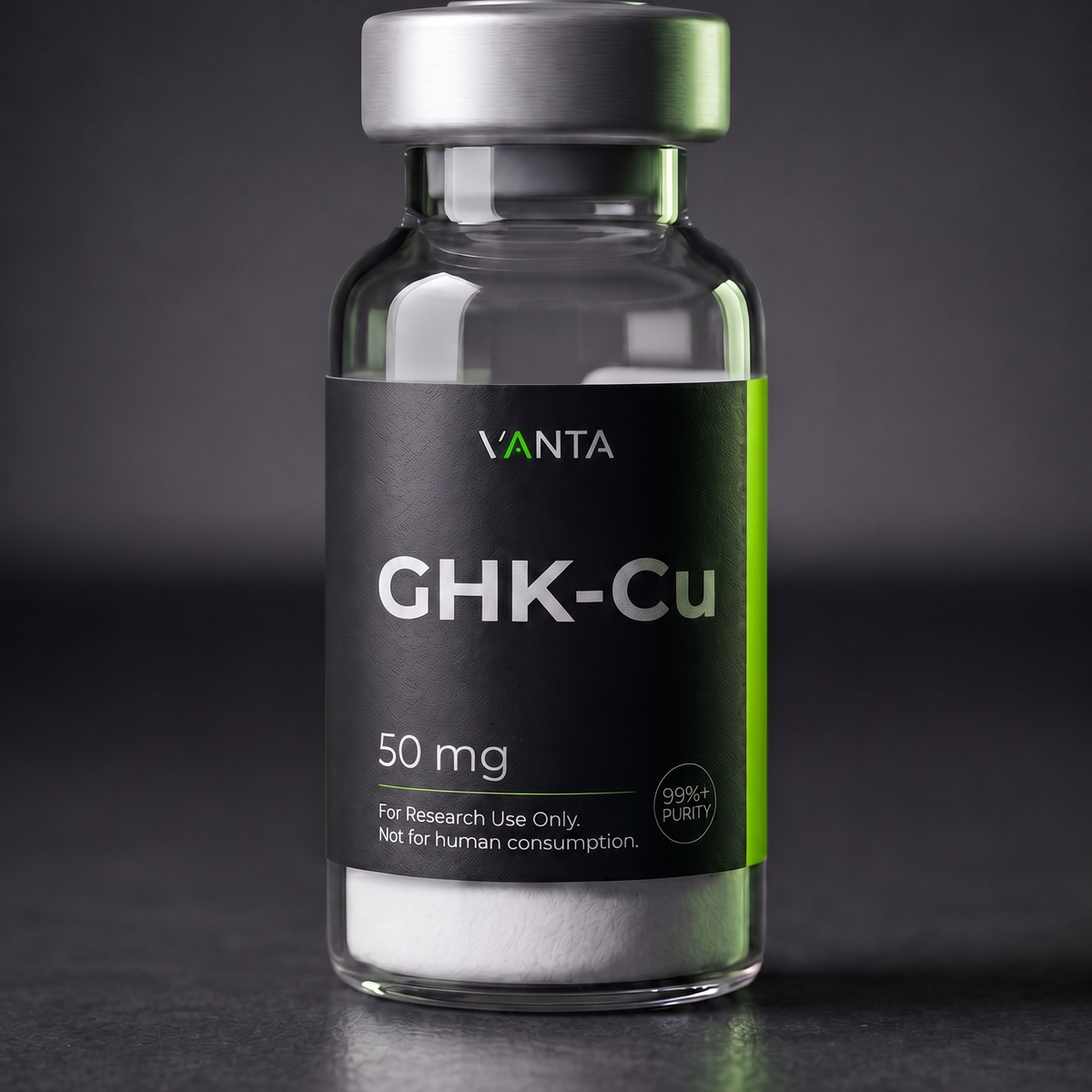
Tripeptide-Copper Complex
GHK-Cu
Copper Peptide
GHK-Cu is a small copper-carrying peptide that the body makes naturally. It is researched for its role in skin repair, collagen production, and how wounds heal. Researchers study how it binds copper and signals nearby cells to rebuild and reorganize tissue, and it is also explored for antioxidant activity.
Select size
Buy more, save more
Applied automatically by total quantity in your cart. Stacks with the 10% crypto discount.
Free US shipping. Ships from our US warehouse in 5-7 days - order today, arrives Jun 28 - Jun 30.
Best price online. Compare it anywhere - this is the lowest you will find.
Third-party tested. COA available for this batch (≥99.3% purity).
Crypto checkout. Pay with BTC, ETH, or USDC and save 10%.
Add bacteriostatic water to your order
Required to reconstitute peptides - not included.
Overview
GHK-Cu is the copper(II) complex of the tripeptide glycyl-L-histidyl-L-lysine (Gly-His-Lys), a naturally occurring copper-binding sequence first isolated from human plasma. In its complexed form, the histidine imidazole, terminal amine, and a deprotonated amide nitrogen coordinate the copper ion, giving the molecule its characteristic blue color. This research grade GHK-Cu is studied as a model copper-carrier peptide and as a tool compound in extracellular-matrix and fibroblast biology, supplied strictly for in-vitro and laboratory investigation.
Across decades of preclinical literature, the GHK-Cu peptide has been examined in cultured fibroblast systems, ex-vivo skin tissue, and animal wound models. Reported observations include associations with collagen synthesis, modulation of matrix metalloproteinase-2 (MMP-2) expression, and gene-expression changes linked to matrix remodeling, antioxidant response, and DNA repair pathways. These are model-specific mechanistic findings from in-vitro and animal studies. They describe what was observed in particular laboratory preparations and are not demonstrated outcomes in humans.
Researchers reference GHK-Cu because it sits at the intersection of trace-metal biology and peptide signaling, with a well-defined copper coordination and an extensive published record. A characterized sequence lets new in-vitro or preclinical results be benchmarked against prior work, which is why identity and purity verification matter for a research-grade supply. Anyone looking to buy GHK-Cu for research should confirm both chromatographic purity and mass-spec identity per lot, the basis on which VANTA positions this material for laboratory use only.
Research Areas
Handling & Reconstitution
VANTA supplies GHK-Cu as a lyophilized powder. Store the sealed vial at -20C and protect it from light to preserve the copper-peptide complex. For research preparation, the lyophilized powder is typically reconstituted in a suitable laboratory solvent such as bacteriostatic or sterile water, then kept cold and shielded from light. Reconstituted aliquots are best used promptly within experimental protocols to limit degradation. Handling is for laboratory research only.
Frequently asked questions
What is GHK-Cu?
GHK-Cu is the copper(II) complex of the tripeptide glycyl-L-histidyl-L-lysine (Gly-His-Lys), a naturally occurring copper-binding sequence first isolated from human plasma. In research it is studied as a model copper-carrier peptide and as a tool compound in extracellular-matrix and fibroblast biology, for laboratory use only.
What form and purity is this GHK-Cu supplied in?
It ships as a lyophilized powder, the tripeptide-copper complex (molecular formula C14H24N6O4 with bound copper). Each lot is characterized by reversed-phase HPLC for chromatographic purity, and identity is confirmed by mass spectrometry against the expected molecular mass of the GHK-Cu complex.
How should GHK-Cu be stored and reconstituted?
Store the lyophilized vial at -20C and protect it from light to preserve the copper-peptide complex. For research, the powder is reconstituted in a suitable laboratory solvent, then kept cold and shielded from light, with aliquots used promptly within experimental protocols to limit degradation.
Is GHK-Cu third-party tested and does it come with a COA?
Yes. Every batch ships with a per-batch Certificate of Analysis documenting the HPLC purity figure, the mass-spec identity confirmation, and lot-specific handling notes. The COA lot number matches the vial in hand, supporting traceability and reproducibility across experiments.
What research areas is GHK-Cu studied in?
In preclinical and in-vitro literature, GHK-Cu has been examined for associations with collagen synthesis, dermal and extracellular-matrix remodeling (including MMP-2 expression), and antioxidant signaling. These are model-specific observations from fibroblast cultures, ex-vivo skin, and animal studies, not demonstrated human outcomes.
Is GHK-Cu intended for human use?
No. GHK-Cu supplied by VANTA is for laboratory and research use only. It is not for human consumption, administration, or any therapeutic, diagnostic, or clinical application, and nothing here describes use in humans or animals outside controlled research settings.
Specifications
- Research Class
- Tripeptide-Copper Complex
- Sequence
- Gly-His-Lys (Cu²⁺ complex)
- Molecular Formula
- C14H24N6O4·Cu
- Molar Mass
- 403.94 g/mol
- Form
- Lyophilized Powder
- Storage
- Lyophilized: -20°C, protect from light.
For laboratory research use only. Not for human consumption, diagnostic, or therapeutic use. Must be 21+ to purchase.
More in Recovery & Repair
BPC-157
A widely studied repair peptide researched for healing tendons, ligaments, and the gut lining.
TB-500
A recovery peptide researched for cell movement, flexibility, and tissue repair across the body.
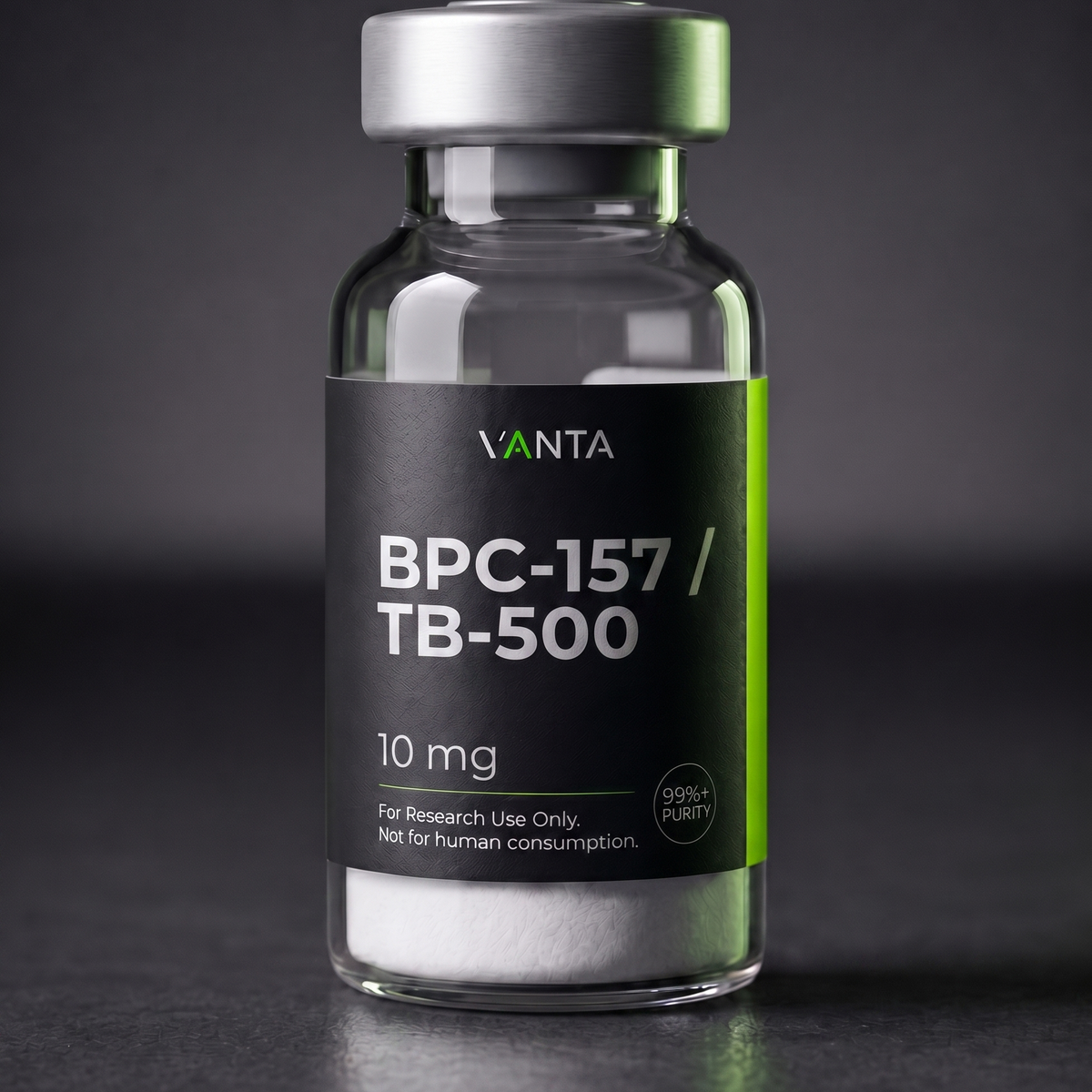
BPC-157 + TB-500
Two well-known repair peptides in one vial, researched together for tissue healing and recovery.
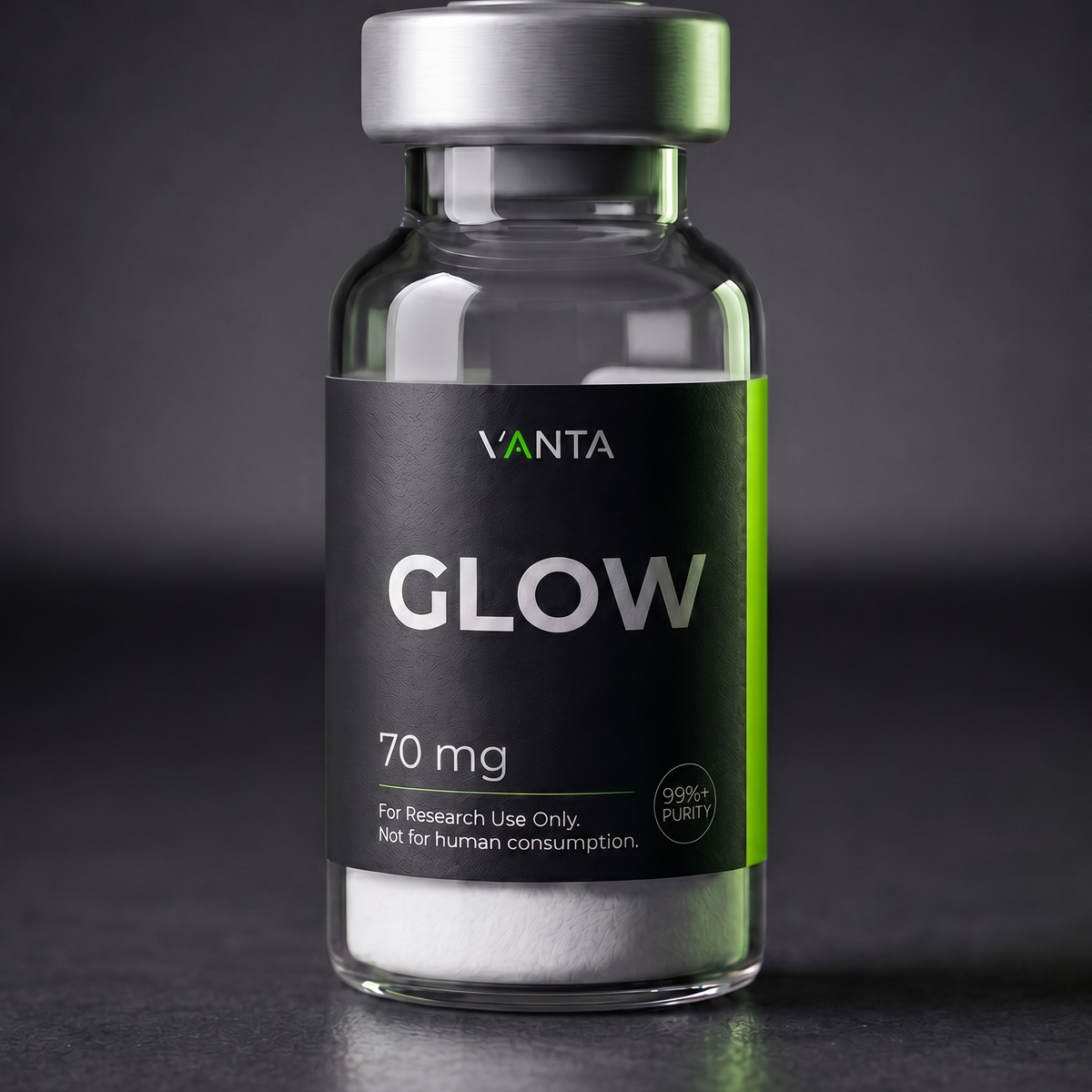
GLOW
A three-peptide vial researched for skin, repair, and all-in-one recovery.